Clean Water for Kenya and East Africa
Since 2021 we have completed 33 wells, bringing clean water to over 35,000 people in Kenya.
One Water Well Can Transform an Entire Community
Project Overview
Bring Life Mission identifies communities without reliable access to clean water, drills a well, installs an autonomous solar-powered pumping system and provides the water to local families—free of charge, for generations to come.
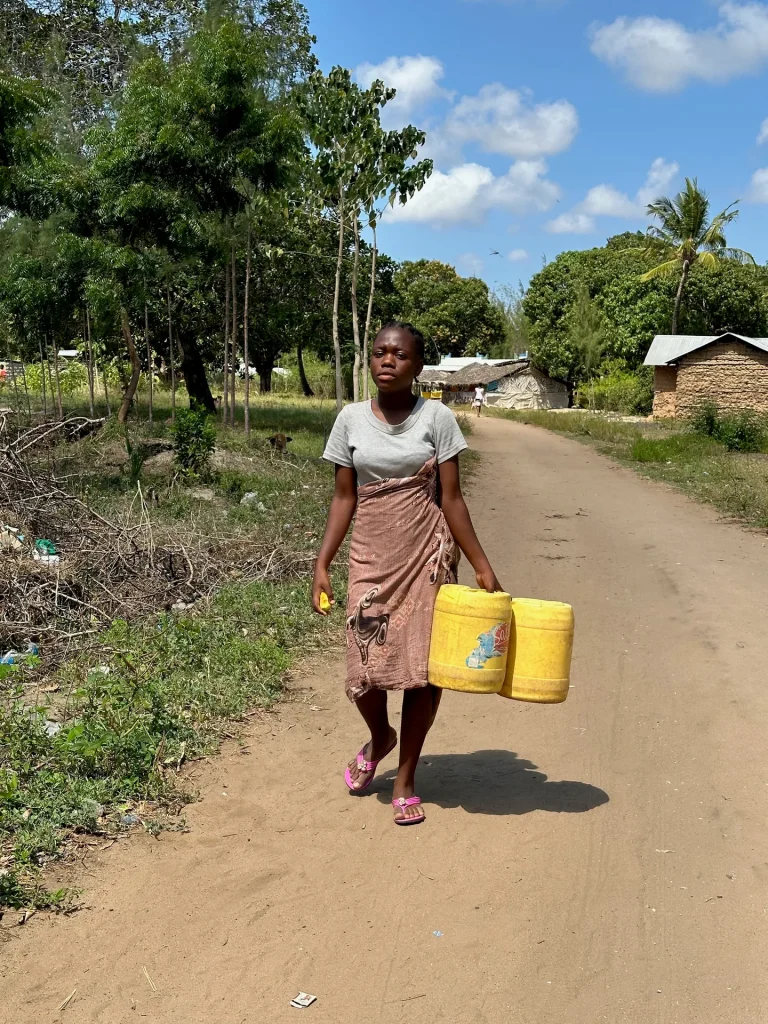
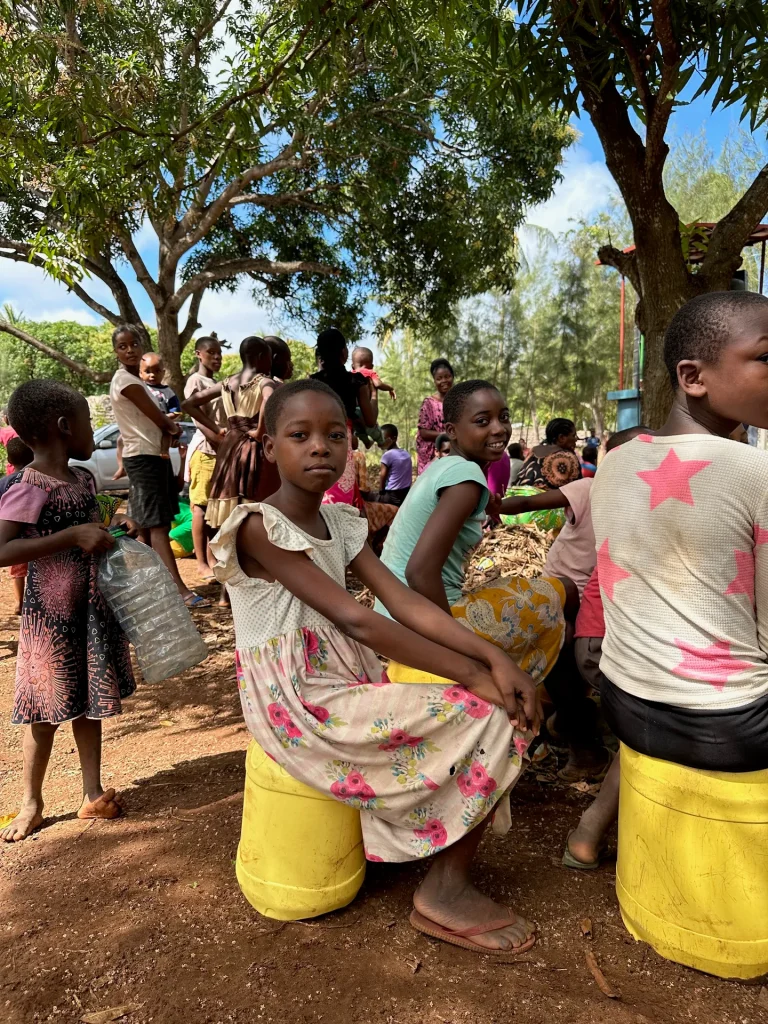
Behind every well is a real community where women and children walk for miles and may have no source of water except muddy rivers and stagnant ponds.
In Kenya, Clean Water Is a Matter of Life
Why It Matters
About 40% of people in Kenya lack access to clean water. Millions rely on muddy rivers, ponds and standing water—the same sources used by livestock.
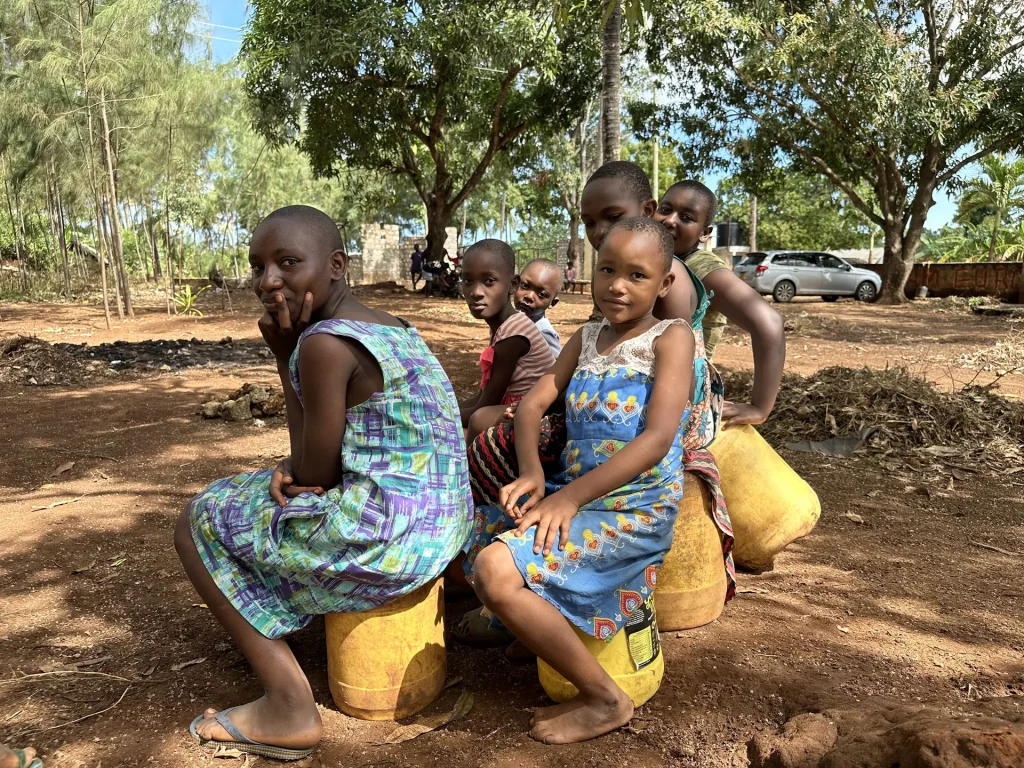
Every day, nearly 1,000 children under age five die from diseases linked to unsafe water, including cholera, typhoid and dysentery. Around 1.8 billion people live without drinking water at home. Women and girls spend up to 250 million hours every day collecting water—often walking for miles in 95°F heat while carrying a five-gallon container.
In the village of Mlimani, we watched a mother and daughter collect water from a muddy pool. We asked, “Why here?” Their answer was simple: “There is nowhere else for us to get water.”
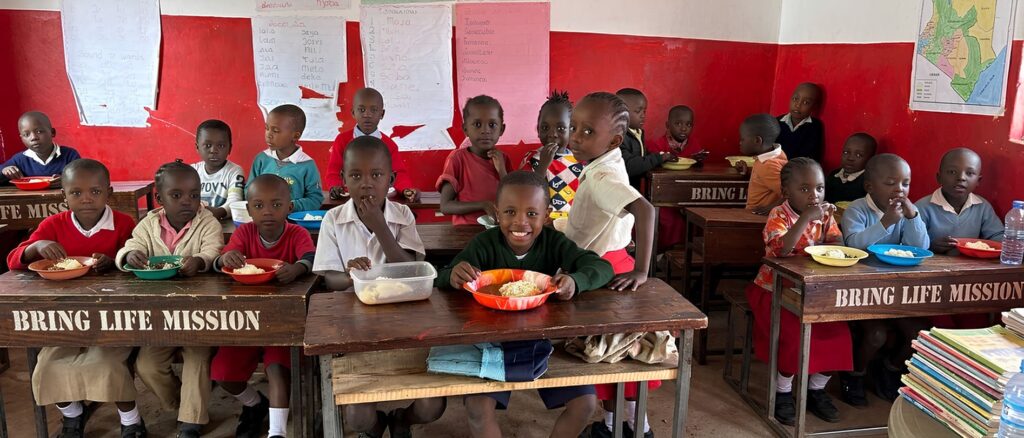
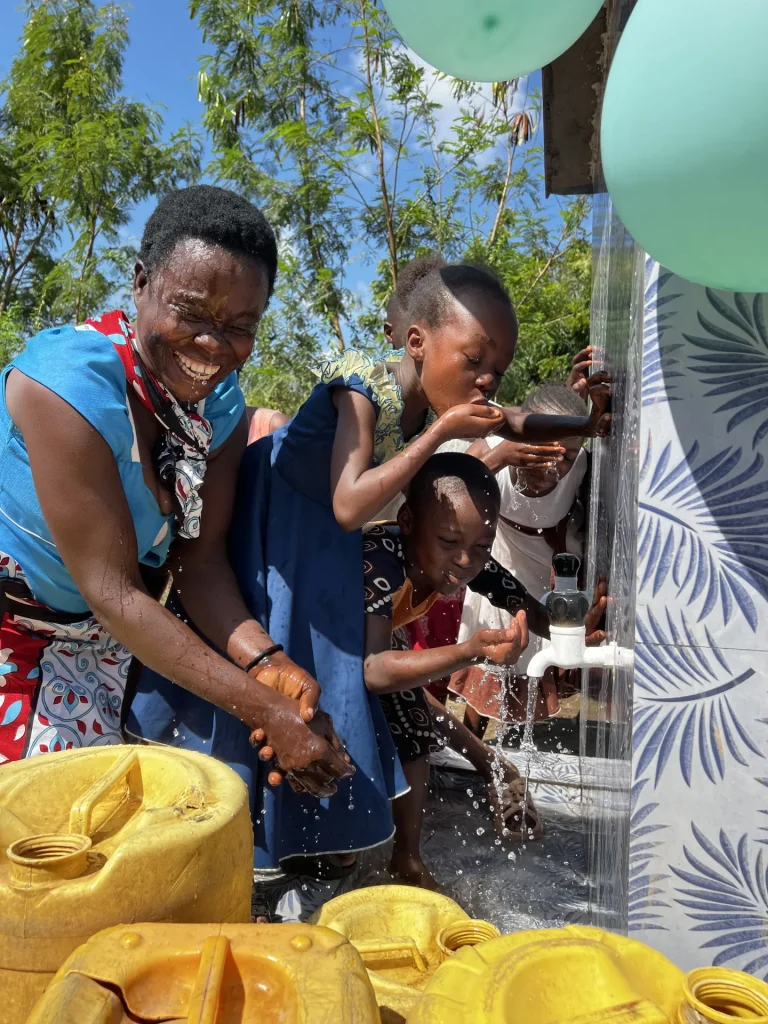
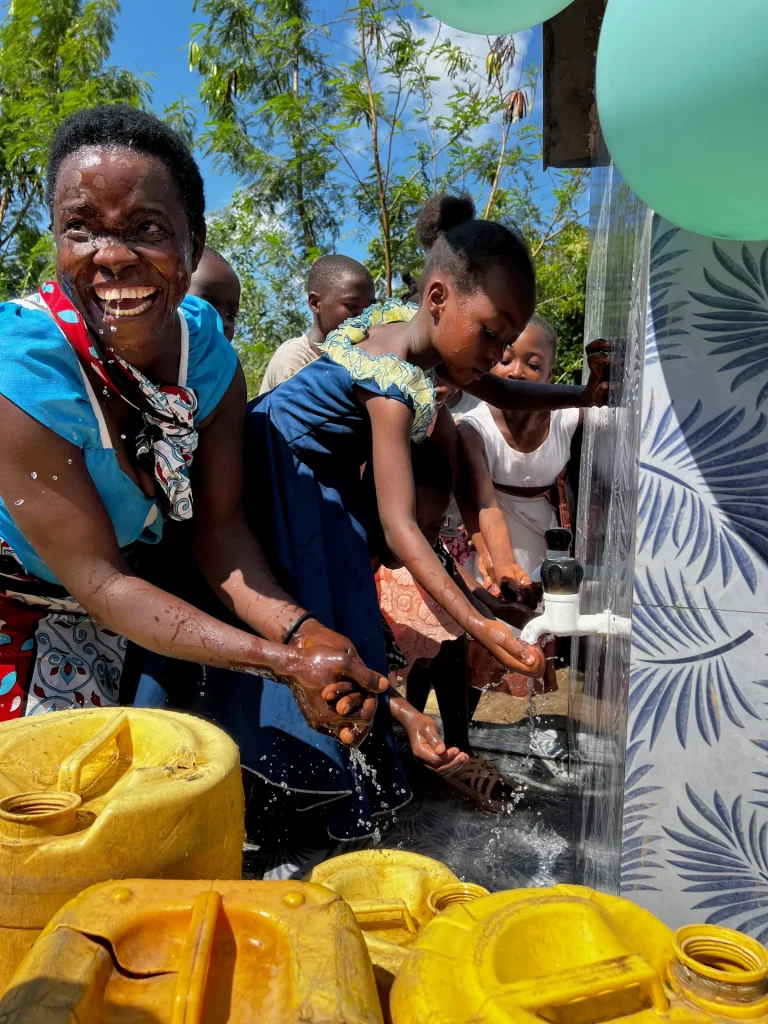
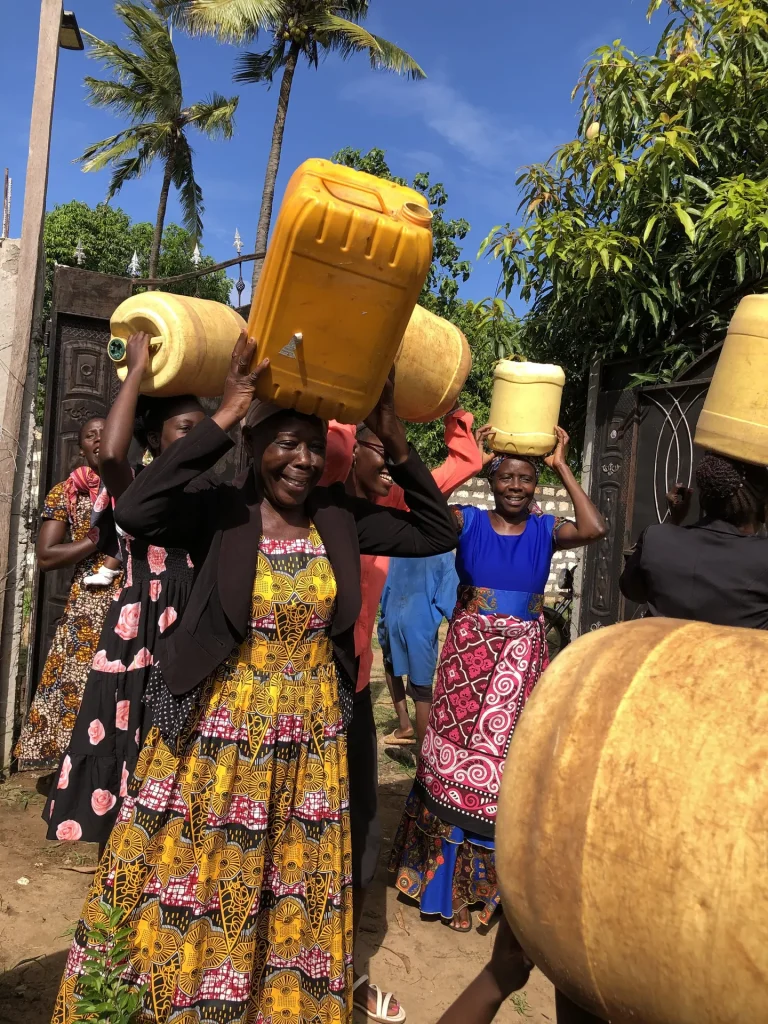
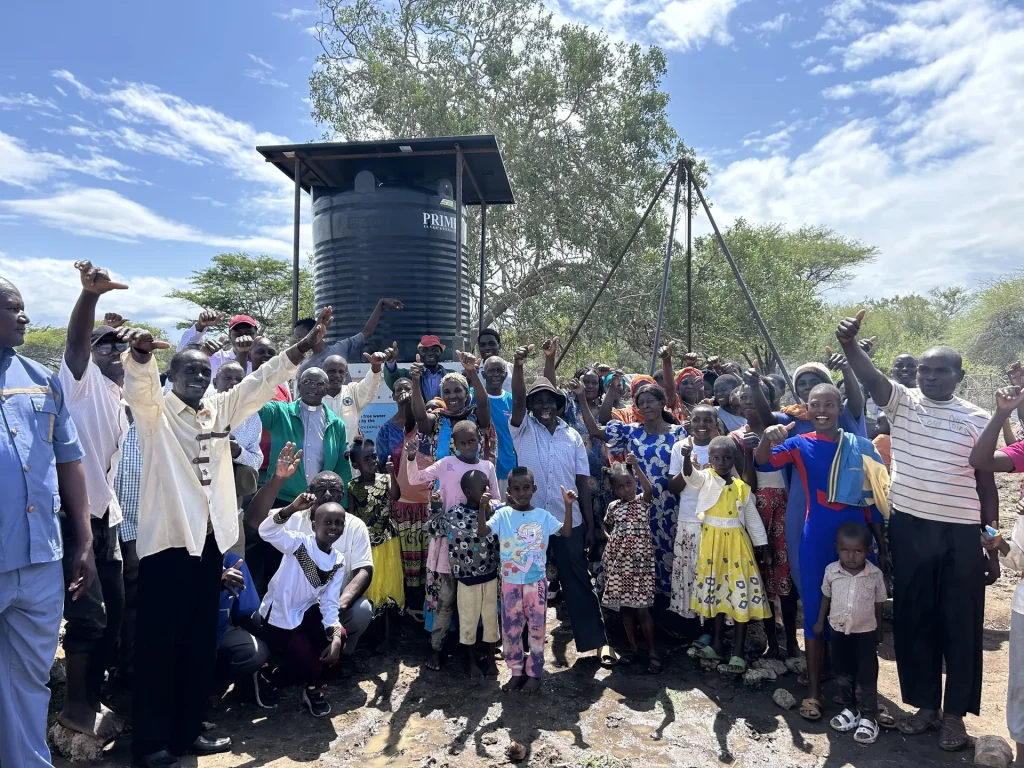
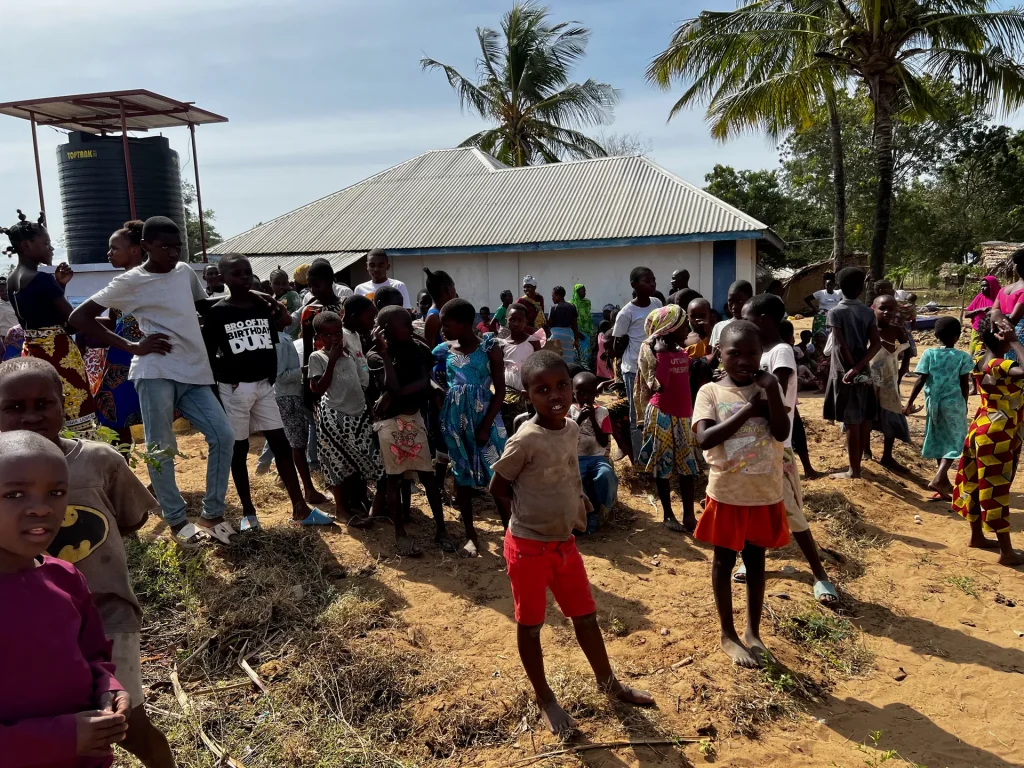
One well changes this for good: clean water, fewer illnesses, more time for children to attend school and more opportunity for women to care for their families and earn a living. Mlimani now has a well of its own—and on opening day, the entire village lined up for clean water.
What We Build
Our Approach
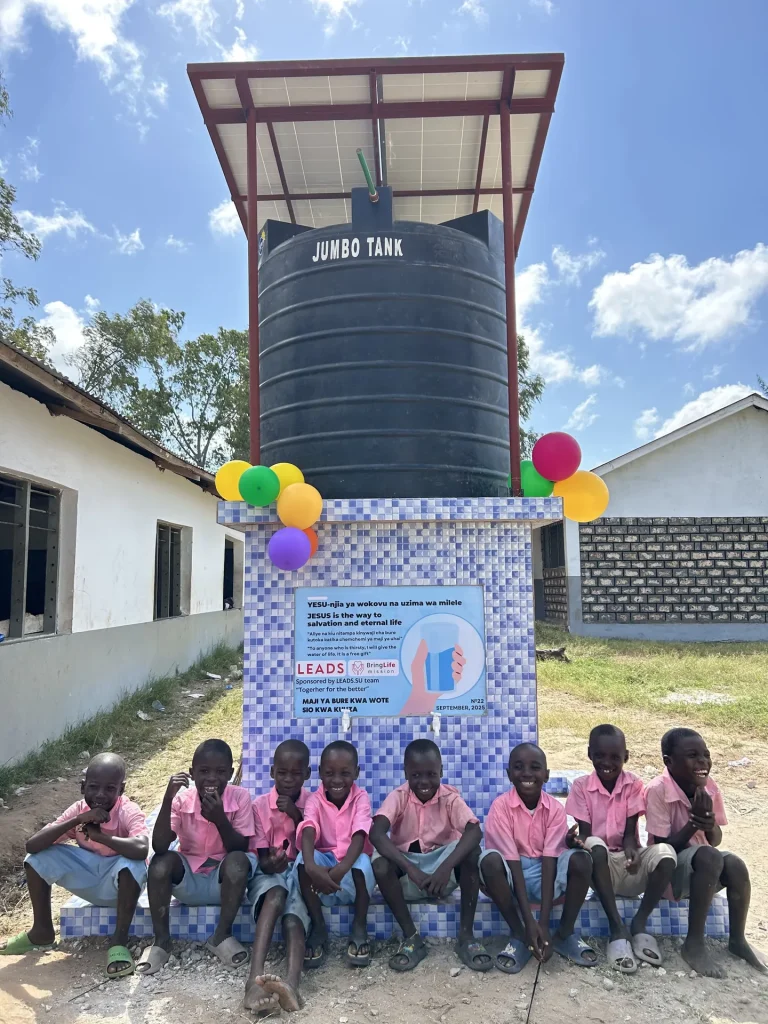
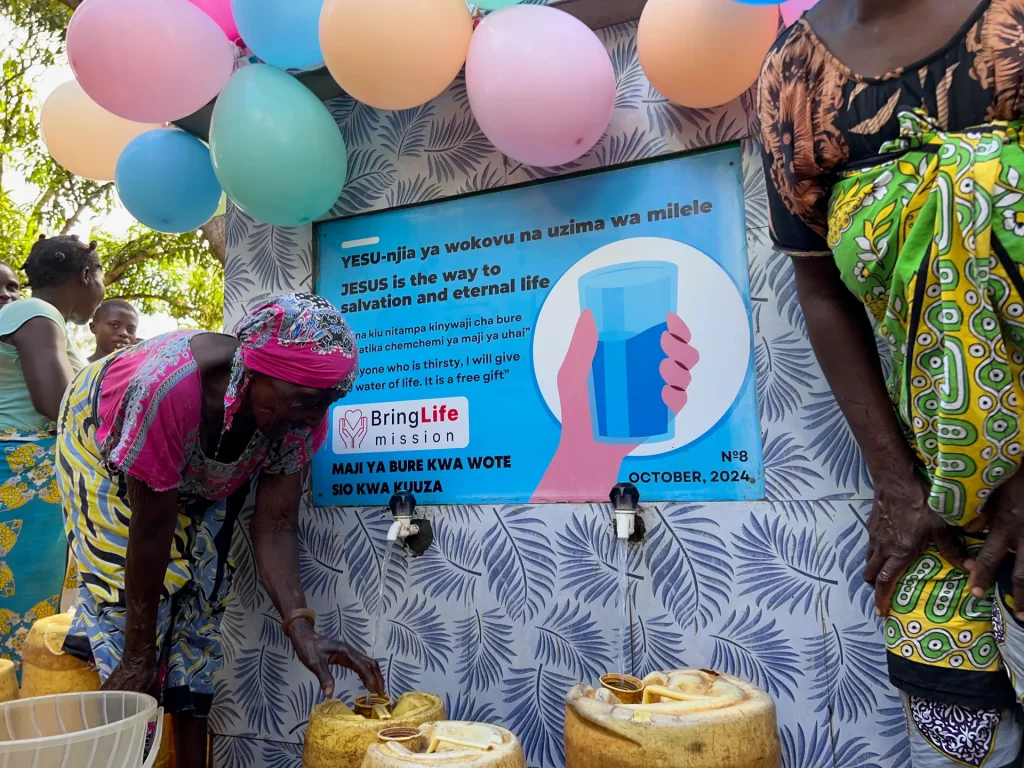
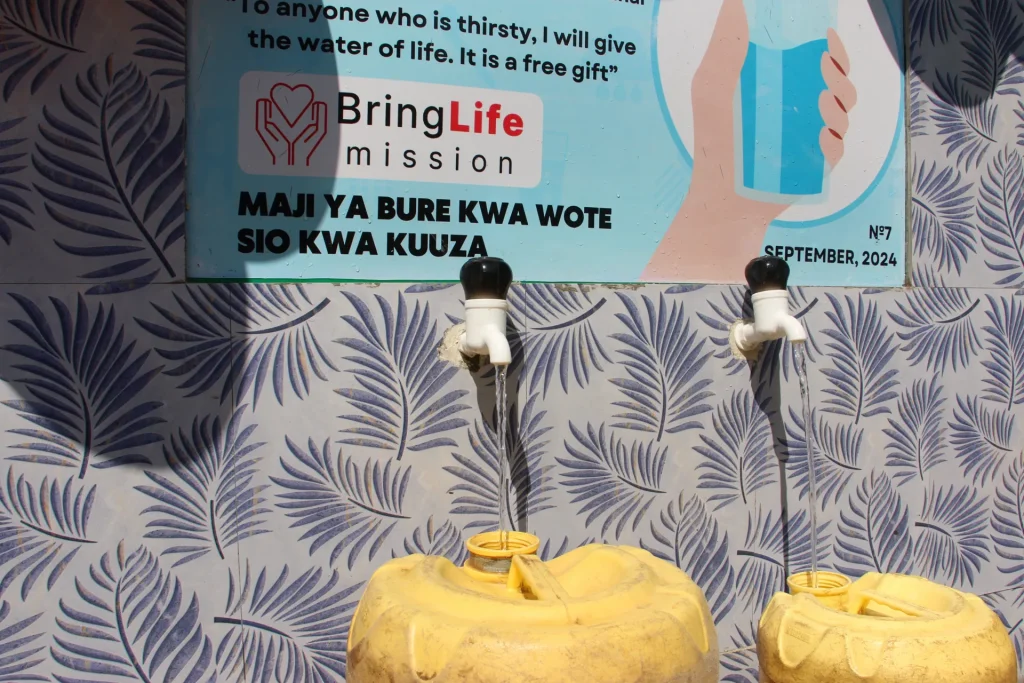
We do more than drill a borehole—we build a complete, self-contained water station for an entire community. Water is pumped into a storage tank and distributed through six, or when needed nine, faucets so several families can collect water at the same time. The water is clean, free and available to everyone.
Hand-Pump Well
Water is pumped by hand. This is the most affordable option for locations without electricity.
Electric-Pump Well
An electric pump fills the storage tank from the power grid where reliable electricity is available.
Solar-Powered Well
An electric pump runs on solar power and fills the tank throughout the day. The station operates independently. This is our preferred system today.
Almost all of our new wells are solar powered. They require no grid electricity or daily hand pumping, operate reliably and can serve many people at once. Deeper wells require a stronger pump and additional solar panels.
Each well serves an average of 800 to 2,000 people, and in densely populated communities it may serve more than 2,500. In the Mtangani settlement near Malindi, one Bring Life Mission well provides water to more than 1,500 people every day.
Real Communities. Real People.
Communities Where We Have Built Water Wells
Mtangani Settlement
A crowded settlement on the outskirts of Malindi, where homes stand only inches apart and residents once carried water over long distances.
One well here provides clean water to more than 1,500 people every day.
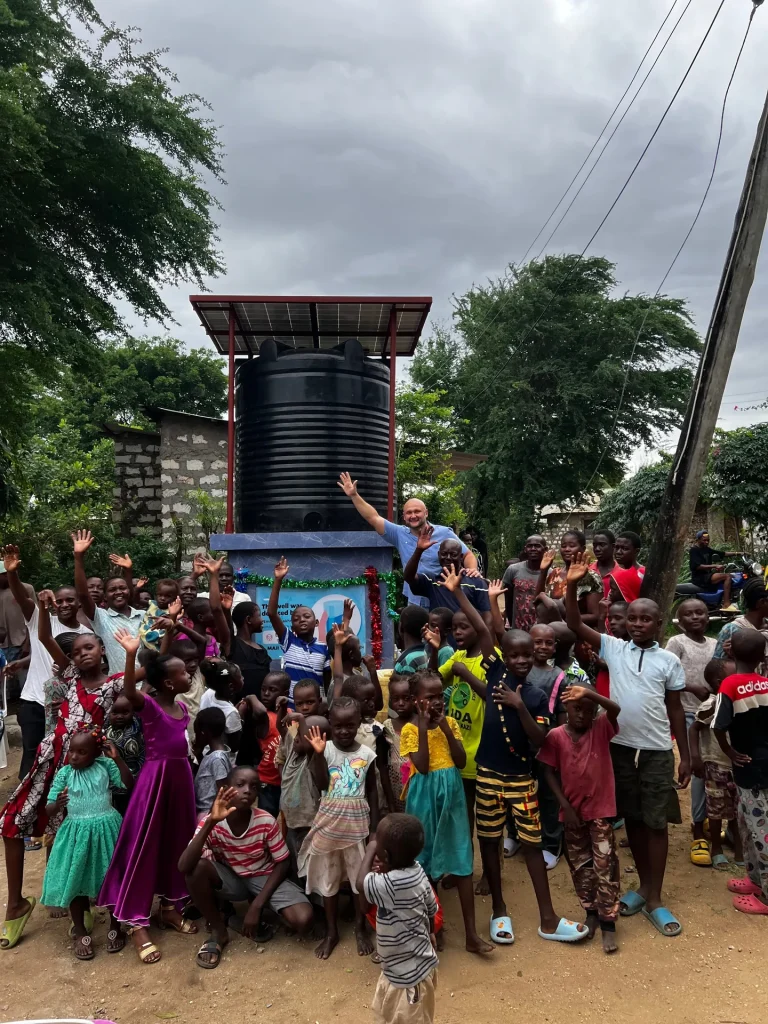
Masheheni Settlement
With no reliable water source, families collected water from the same muddy pools used by livestock. The community once suffered a cholera outbreak caused by unsafe conditions.
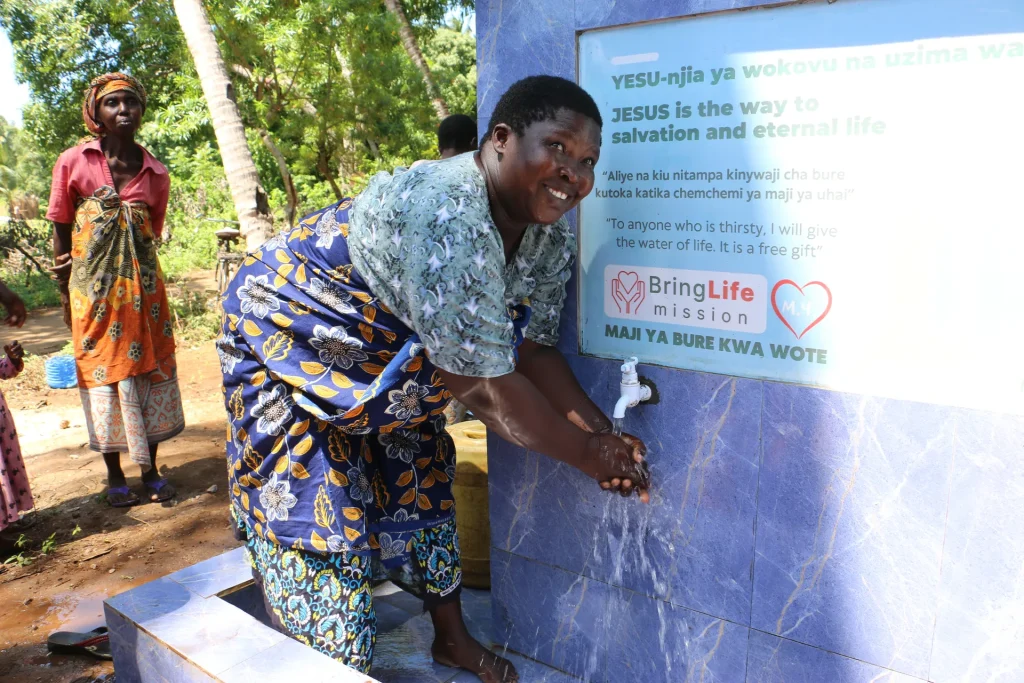
Today, the community has its own well providing clean water at no cost.
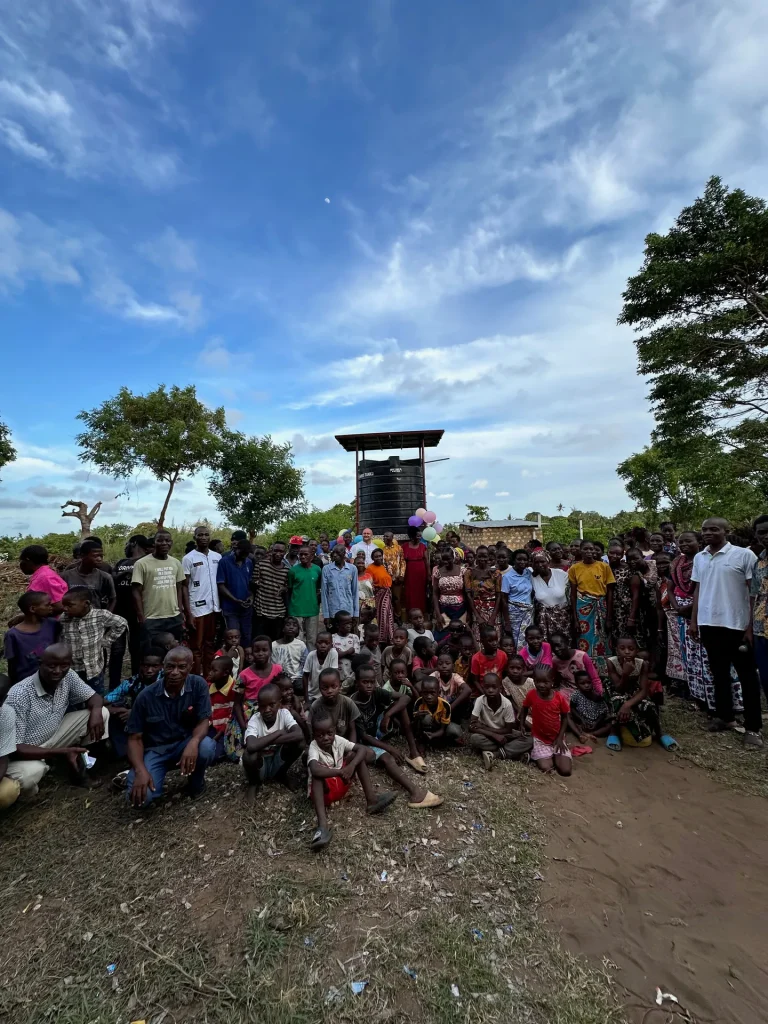
Mlima Abu Village (Tana River County)
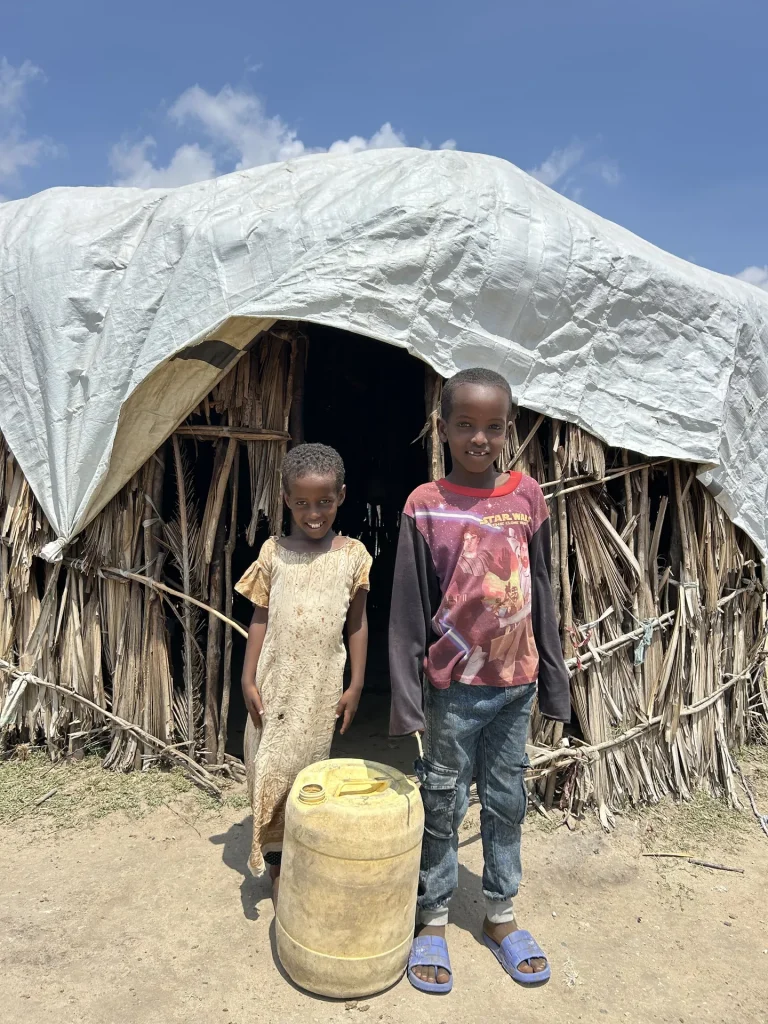
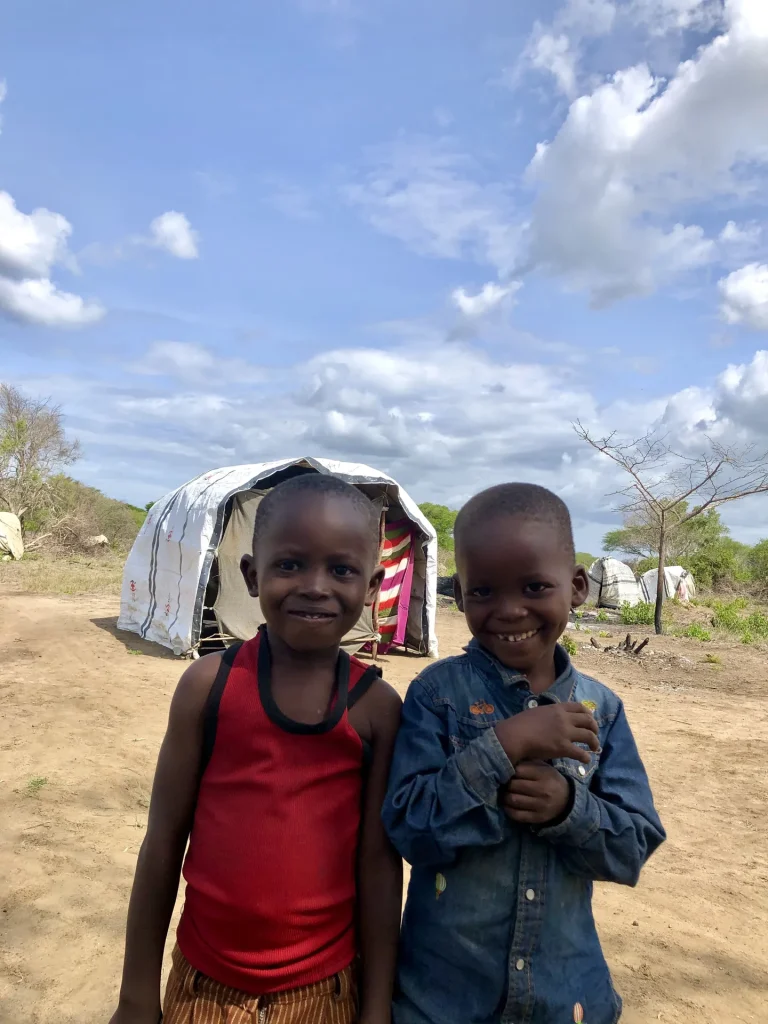
About 100 families were relocated here after devastating floods. Many live in shelters made from branches and fabric as they rebuild their lives.
Despite having so little, residents welcome visitors warmly—even offering a blessing with the water that is so scarce in their own community.
How We Build a Complete Water-Well System
How It Works
From identifying a community in urgent need to opening day, our team selects the location, manages construction, verifies quality and places the completed water station into community service.
Site Selection
We survey the region and select a community based on urgent need, site safety, public access and the depth of the water table.
Community Agreement
We secure a land-use agreement with the local community or church, establish local stewardship and ensure that the well remains open to everyone.
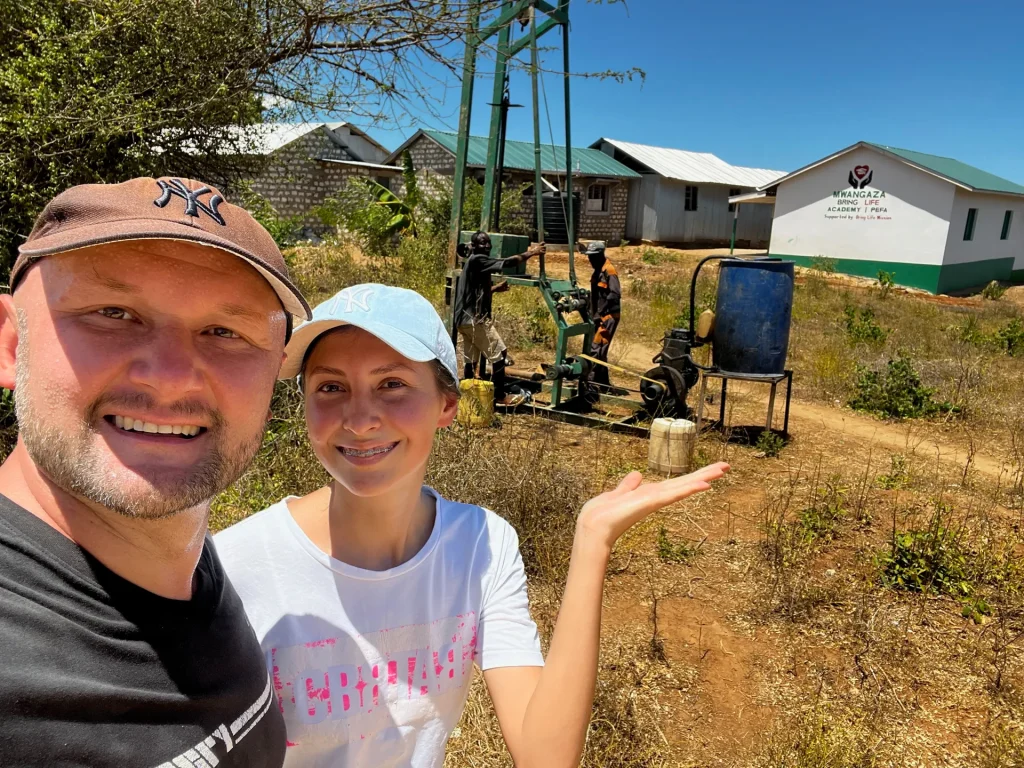
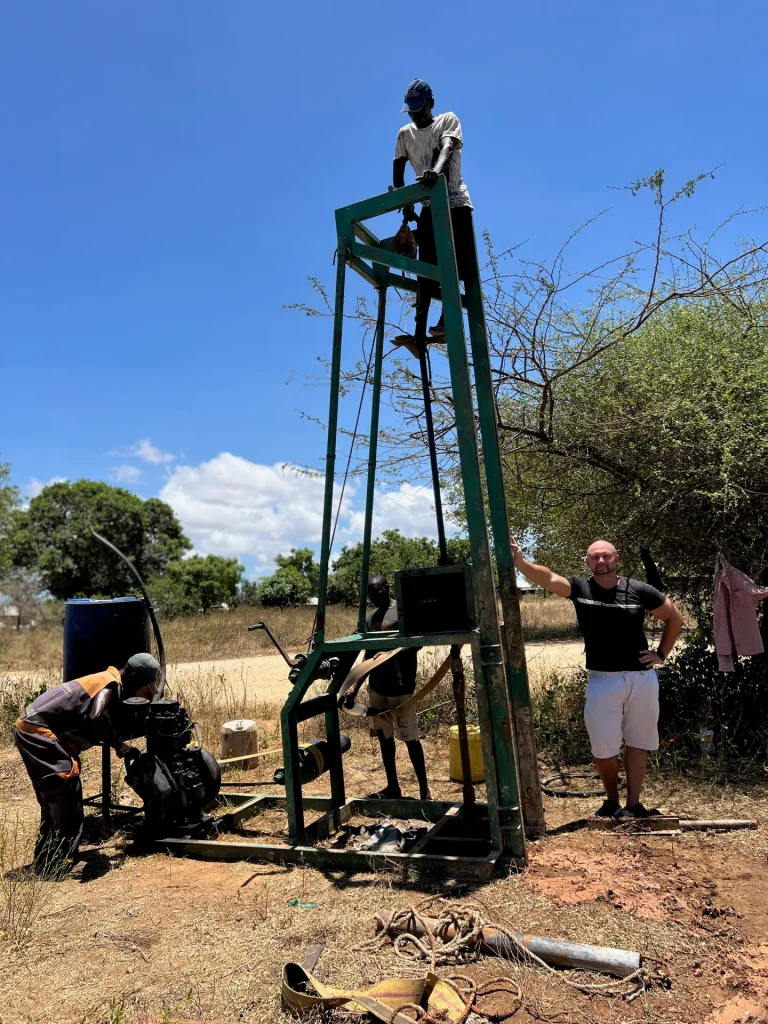
Drilling and Installation
We drill the borehole, install the electric pump, build the water-storage structure, mount the tank, connect the solar panels and faucets, and complete all finishing work.
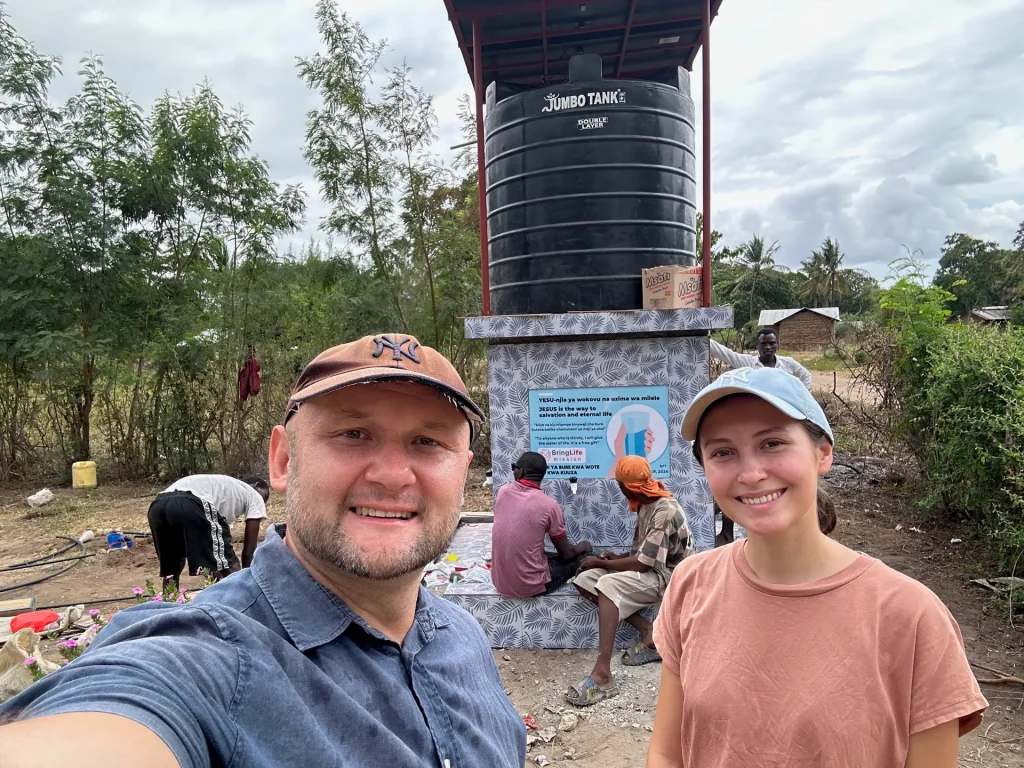
Quality Inspection
Before opening, our team checks every connection, all finishing work and the overall construction quality. We confirm that the station operates independently throughout the day.
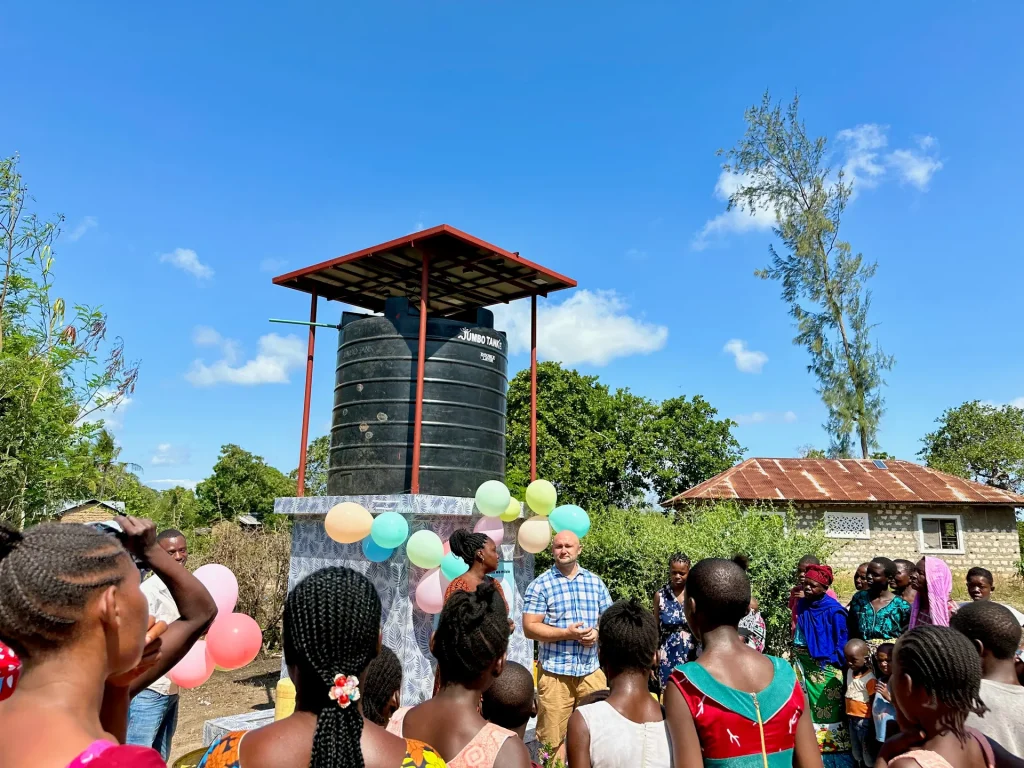
Opening Day
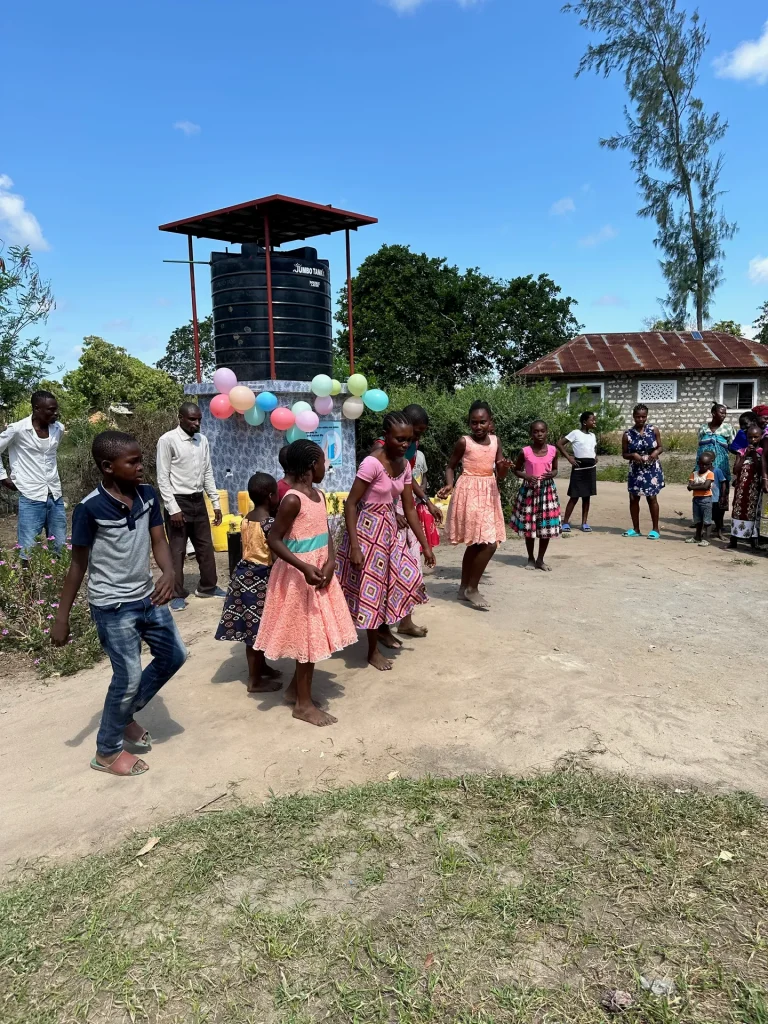
We turn on the water and place the well into community service—an opening day is always a celebration.
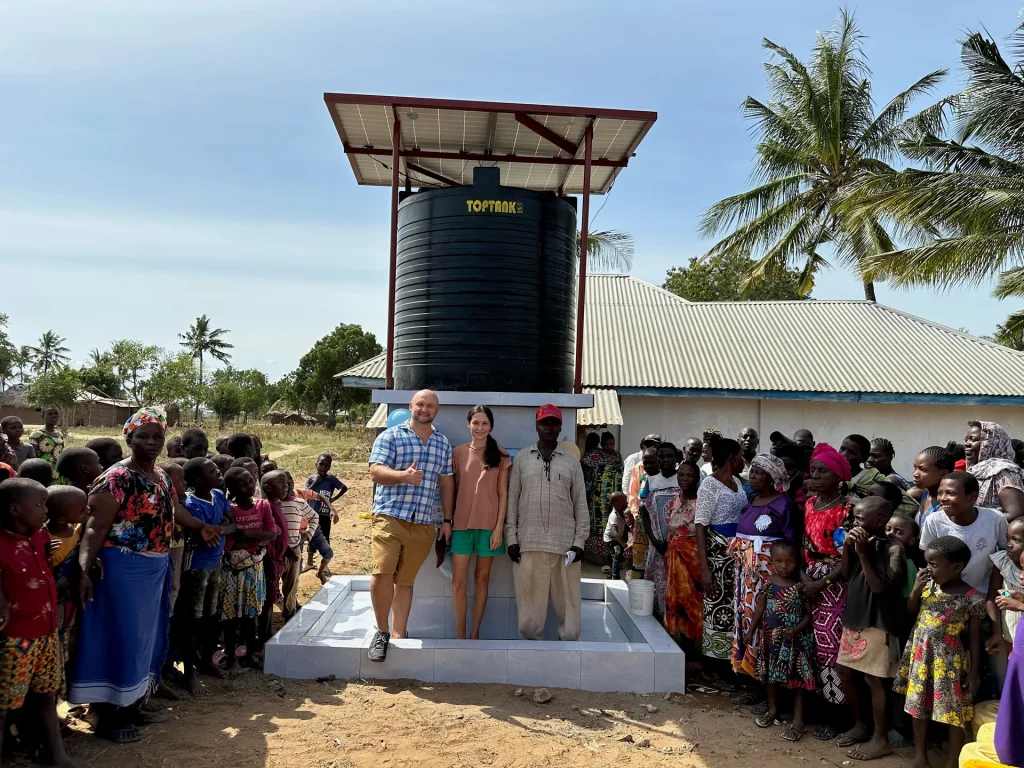
Donor Report
You receive photos, video and the exact location of the completed well.
Timeline: Work begins within one month after funding is complete and previously scheduled wells are finished. A well up to 130 feet deep typically takes 1–3 months; a deeper well generally takes 3–5 months. We aim to complete the full project within six months. The structure carries a three-year warranty, and equipment carries a one-year manufacturer warranty. Post-warranty service is available.
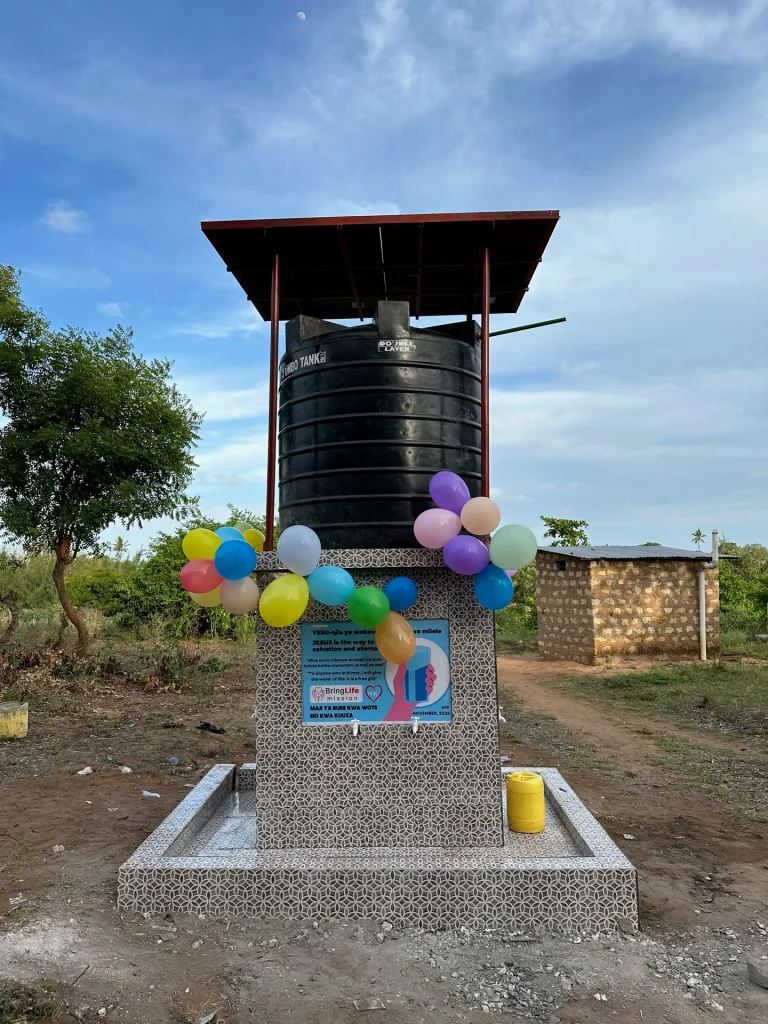
+
water-storage structure
+
custom design
Fund a Water Well in Kenya
Water-Well Cost
A complete hand-pump well starts at $3,000. A fully autonomous solar-powered well with an electric pump and water-storage system starts at $4,500. Final cost depends on water depth, soil conditions, drilling method, pump capacity and the number of people the system will serve.
+
water-storage structure
+
water-storage structure
+
solar powered
+
fully autonomous
For comparison, many international organizations spend $25,000–$50,000 on a solar-powered water well. Because our team builds directly in Kenya, a complete autonomous solar system costs substantially less.
Your donation opens in a secure Zeffy form. Zeffy charges no platform fee to Bring Life Mission. Bring Life Mission is a U.S. 501(c)(3) nonprofit, and donations are tax-deductible to the extent allowed by law.
You Can Bring Clean Water to a Community
Ways to Help
Fund an entire well — and transform an entire community for generations.
Give any amount — every gift moves the next water well closer to completion.
Dedicate a well — name the well or honor someone special with a permanent dedication plaque.
Give a well as a gift — mark a birthday, wedding or memorial with a life-changing gift in your name.
Become a monthly partner — support clean-water projects consistently and receive regular video updates.
Our Next Step
Our Own Drilling Rig
We are expanding into the hardest-to-reach communities, where groundwater may lie more than 720 feet below the surface and outside drilling crews are often unwilling to travel. Owning a drilling rig will allow us to drill deeper, faster and at a lower cost.
Our own rig means more wells each year, a lower cost per project and clean water for communities others have not reached. Help us take this next step.
Accountability
Why Donors Trust Bring Life Mission
- Bring Life Mission is a U.S.-registered nonprofit based in Washington State with 501(c)(3) status. U.S. donations are tax-deductible. EIN: 41-2934183.
- Our team is on the ground in Kenya. We identify communities, oversee construction and open each well ourselves.
- Every completed project includes a detailed donor report with photos, video and the exact location.
- We have served communities in Kenya since September 2013 and have completed dozens of projects.
- You may attend the opening of your well in person. Travel and lodging are at your expense, and our team will help coordinate your visit and answer your questions.
- We are committed to transparency and direct accountability, welcome visitors and are ready to answer your questions.
Bring Life Mission Water Wells in Action
Photos
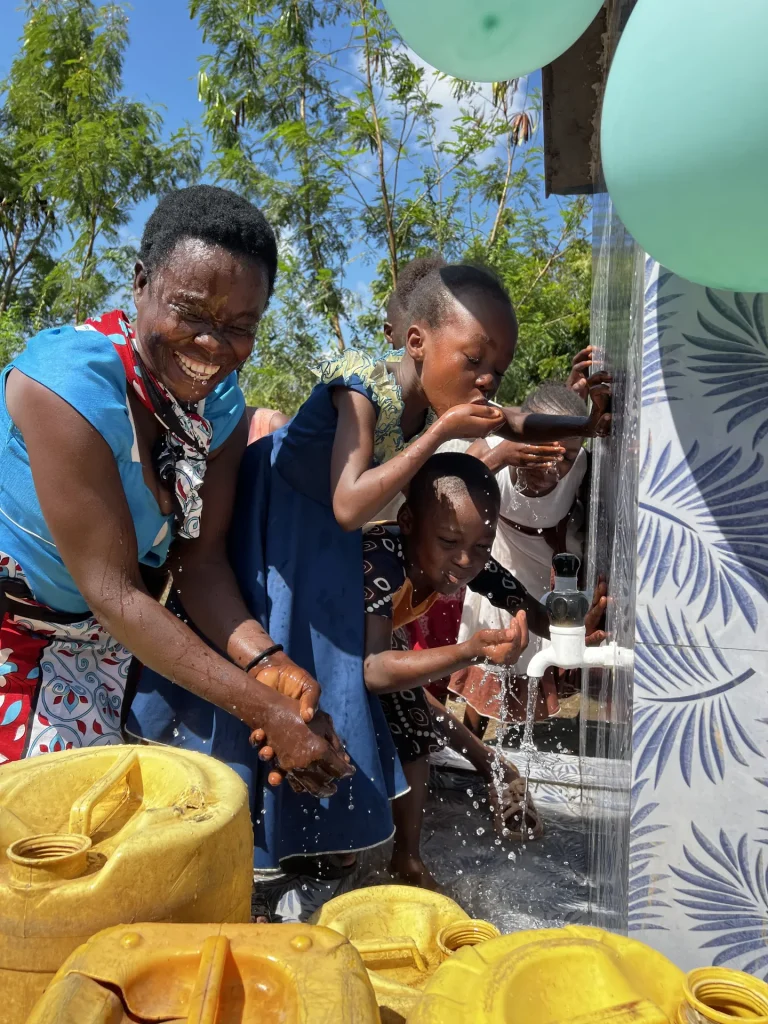
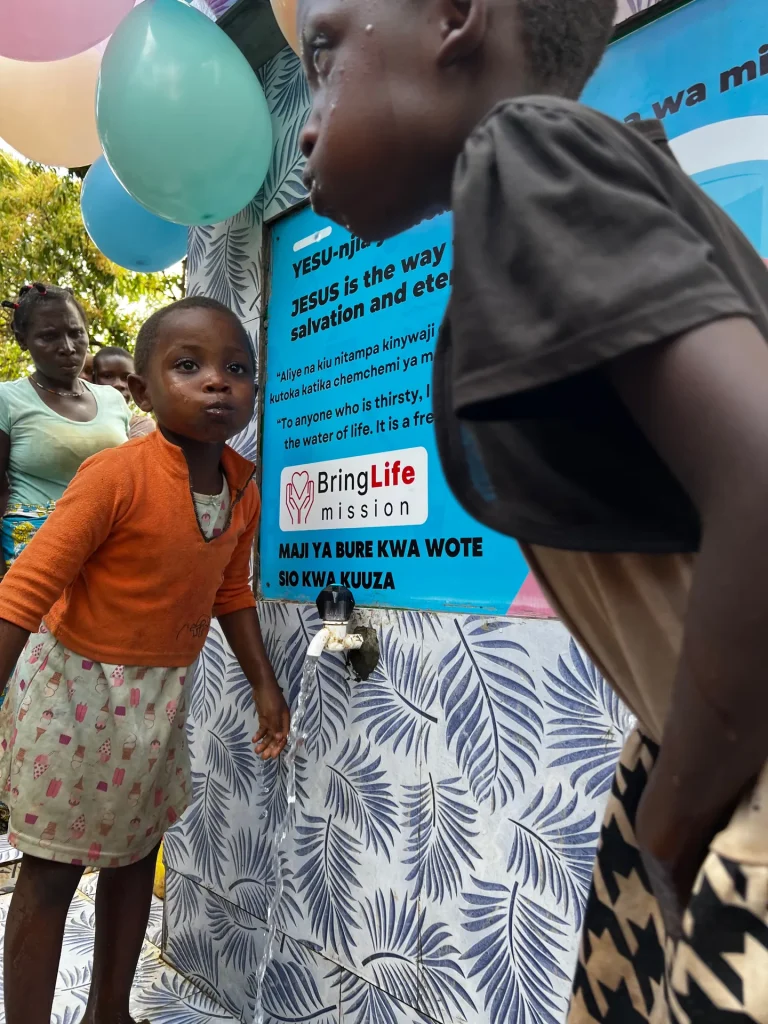
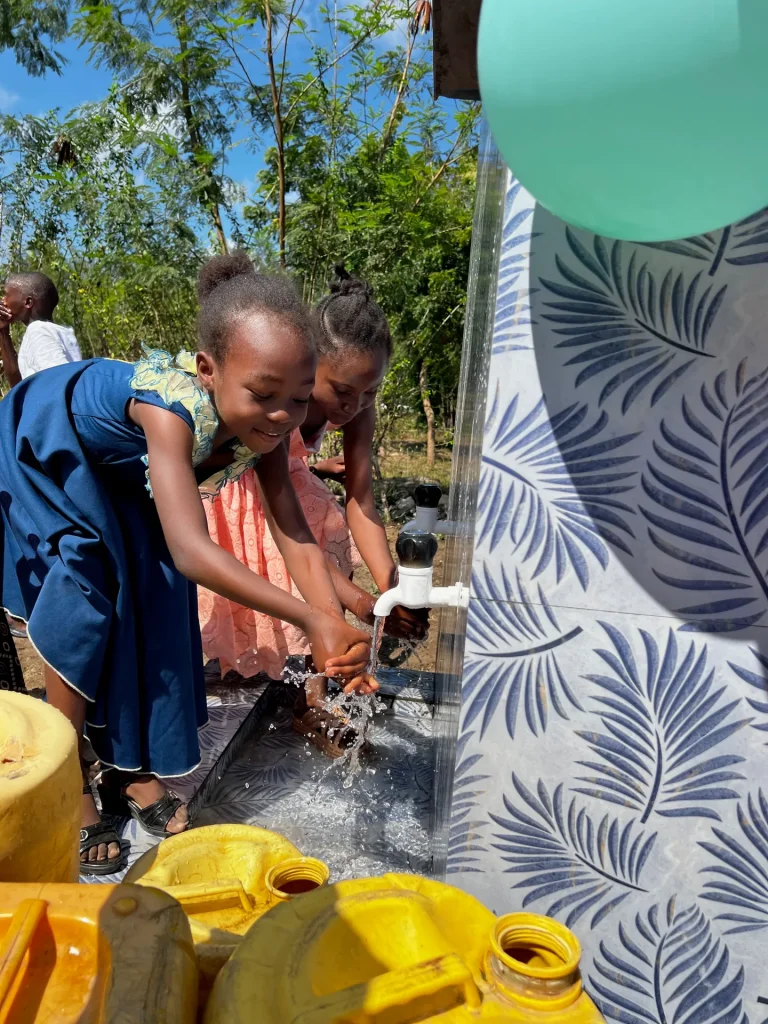
Opening celebrations, children filling containers, solar-powered stations and the joy of families receiving clean water.
Frequently Asked Questions
FAQ
How much does it cost to build a water well in Kenya?
With Bring Life Mission, a hand-pump well starts at $3,000, an electric-pump system starts at $4,000 and a fully autonomous solar-powered well with water storage starts at $4,500. Final cost depends on depth and location; contact us for a community-specific estimate.
How many people can one water well serve?
A well typically serves 800 to 2,000 people and may serve more than 2,500 in densely populated communities.
Is my donation tax-deductible?
Yes. Bring Life Mission is a U.S. 501(c)(3) nonprofit (EIN 41-2934183), and donations are tax-deductible to the extent allowed by law.
How long does construction take?
Work begins within one month after funding is complete and previously scheduled projects are finished. A well up to 130 feet deep usually takes 1–3 months, while a deeper well takes 3–5 months. We aim to complete the full project within six months.
Can I name or dedicate a water well?
Yes. You may dedicate a well to someone special or give it in honor of a birthday, wedding or memorial. Your name or dedication will appear on a permanent plaque.
Where do you build water wells?
We serve communities across Kenya and currently build primarily in the coastal counties of Kilifi, including the Malindi area, Tana River and Lamu. Bring Life Mission also serves neighboring countries in East Africa.
How will I know my water well was completed?
You receive a detailed report with photos, video and the exact location of your well. You may also attend the opening in person.
How do I fund a well or request an estimate?
Contact us to learn which communities are currently waiting for clean water and to receive a site-specific estimate.
Water Wells Project News
Mission News
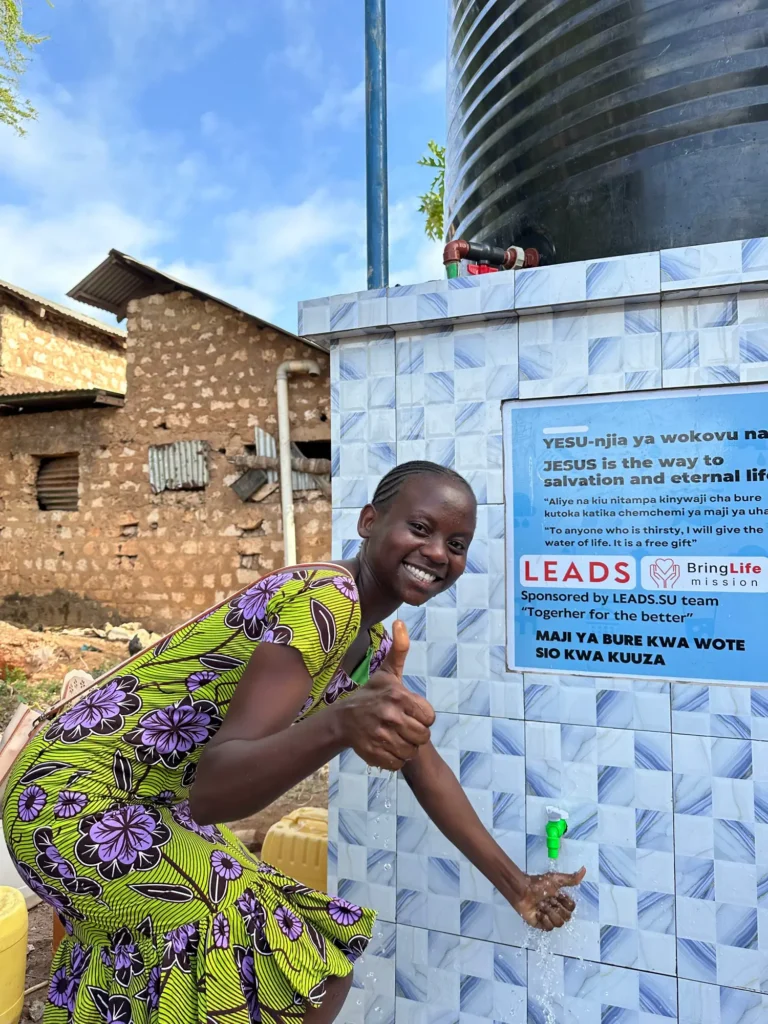
33rd Well Opened in Tezo Village
Bring Life Mission opened its 33rd well in Tezo. The day included singing, dancing, and praising God, with heartfelt thanks from local residents.
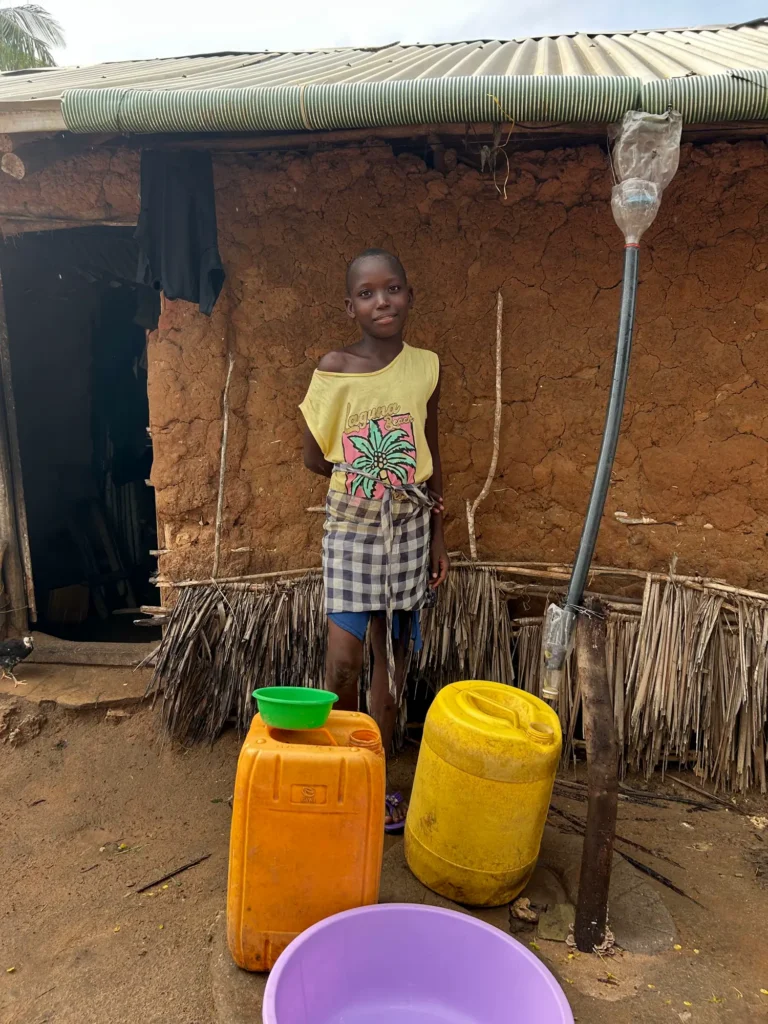
Everyday life of ordinary people: how rainwater is collected in Kenya
Kenya’s rainy season is underway, and local residents collect rainwater in different ways—from simple structures to basins placed under roofs. The practice highlights a…
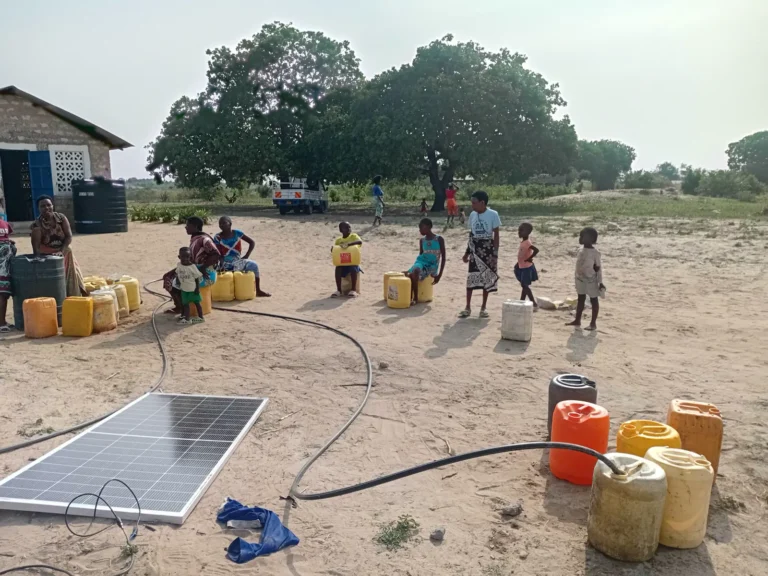
27th clean water well drilling underway in Mpirani
In Mpirani, on PEFA church grounds, a 27th clean water well is being drilled. After three weeks of work through clay and rock layers,…
Right Now, a Mother Is Walking Miles for Unsafe Water
Give a Community Clean Water
You can change this for generations. Fund a well that provides clean, free water and give an entire community better health, more time and new opportunity.
More Bring Life Mission Projects